Gryneion: The Aeolian Oracle of Apollo near Aliağa
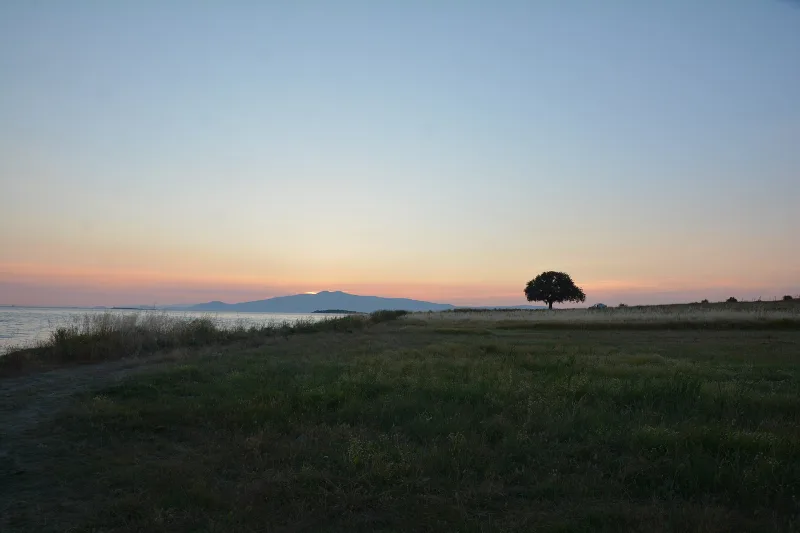
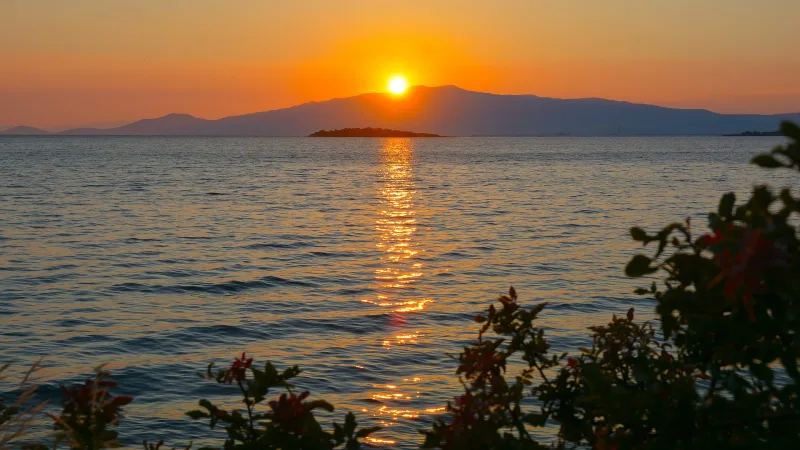
On the sandy stretch of coastline between industrial Aliağa and the quiet village of Yeni Şakran (İzmir Province) lie the modest ruins of Gryneion—an ancient Aeolian town that was home to one of the earliest oracles of Apollo in Asia Minor. Today, the site is little known: a large oil depot stands nearby, and the ruins themselves consist mainly of scattered blocks, the temple’s foundation, and a necropolis area by the road. Yet this place is mentioned by Virgil, Herodotus, and Strabo, and the sunsets over the sea here are among the quietest and most desolate on the Aegean coast of İzmir.
History and Origin
Gryneion (Greek: Γρύνειον, Latin: Grynium) was one of the twelve cities of the Aeolian League during the Archaic period. It was located approximately 40 stadia from Myrina and 70 stadia from Elaea. Over time, the city lost its independence and came under the rule of Myrina. In the 5th century BCE, Gryneion is mentioned as a member of the Delian League: according to surviving Athenian records, its contribution to the common treasury was modest.
In 334 BCE, Parmenion, a general under Alexander the Great, turned toward the coast after capturing Sardis. According to ancient authors, he “took Gryneion by storm, burned it, and sold its inhabitants into slavery.” This put an end to the city’s independent existence as a polis. Nevertheless, the sanctuary and oracle continued to function: Roman authors continue to mention the temple of Apollo of Gryneion and its oracle.
Excavations at the site were conducted sporadically. The first French investigations took place in 1883: ceramic fragments and bronze objects were recovered. In 1959, the Bergam Museum resumed the work. During the expansion of the highway in the surrounding area, a beautiful mosaic and a necropolis area with sarcophagi were discovered. Today, the city lacks a systematic museum development plan, but the ruins are open for independent exploration.
Architecture and What to See
Sanctuary of Apollo Grineus
The main attraction is the site of the Temple of Apollo Grineus. According to Strabo, the temple was “beautiful, made of white marble,” and Pausanias marveled at the sacred grove: “the marvelous grove of Apollo with its cultivated ornamental trees.” Today, mostly the foundations and architectural details of the temple remain, scattered among the grass. Virgil mentions the “Grinian oracle” in the *Aeneid* as the place to which the Trojan Aeneas is sent.
Necropolis and Mosaic
A short distance from the central site lies a necropolis with stone sarcophagi, uncovered during road construction. Some of the finds, including bronze ornaments and pottery, have been transferred to the Bergama Museum and the İzmir Archaeological Museum.
Visible Landscape
Since local development is minimal, the silhouette of the ancient settlement is clearly visible from afar. Individual sections of the fortifications have survived, with some blocks lying right by the sea—an unusual visual combination of ancient stones and the industrial landscape of Aliağa.
Interesting Facts and Legends
- Virgil, in the *Aeneid* (Book IV), mentions the oracle of Apollo Gryneus as one of the places to which the gods directed the Trojans. The epithet “Gryneus” became part of the Latin poetic tradition.
- Apollo received the name “Gryneus” from this very sanctuary; this is how Pausanias and the Roman poets of the Augustan era refer to him.
- The city is included in the traditional list of the twelve Aeolian cities mentioned by Herodotus, alongside Mytilene, Cyme, Pitane, Myrina, and others.
- In 334 BCE, Parmenion stormed Gryneion and sold the inhabitants into slavery—one of the few instances where an ancient source explicitly records the fate of an entire small town’s population.
- Unlike neighboring Myrina and Cyme, Gryneion has barely made it onto the modern tourist circuit: the nearest amenities are a gas station and a roadside café; there are no ticket offices or guidebooks on site.
How to get there
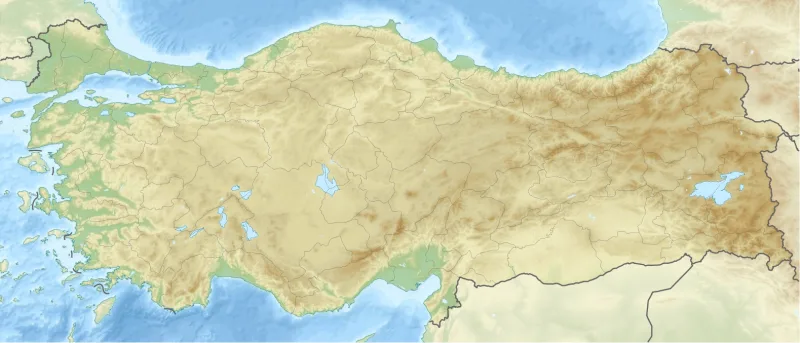
Gryneion is located in the province of İzmir, Aliağa district, near the village of Yeni Şakran (Şakran). GPS coordinates: 38.874, 27.069. The nearest airport is İzmir Adnan Menderes (ADB), about 80 km to the south. The drive from İzmir to Aliağa takes about an hour via Highway D-550 or the toll road O-33.
The most convenient way to get there is by car: there are practically no signs for the “ancient city of Gryneion,” so it’s best to set your GPS to “Gryneion Antik Kenti” or “Yeni Şakran.” Public transportation: take the bus from İzmir to Aliağa, then a dolmuş to Şakran; from the village to the excavation site, it’s about a 1.5 km walk along the coast.
Tips for travelers
This place is not for those looking for a “ruins park.” People come here either for the context (as part of the Aeolian cities route: Cyme — Myrina — Gryneion — Pitane) or for photographic opportunities: the juxtaposition of ancient ruins and industrial scenery creates an unusual image. The best times to visit are in the morning and just before sunset; it gets very hot in the summer afternoons.
Allow 30–60 minutes for the tour. Bring water, a hat, and shoes suitable for walking on gravel. Cafes and shops are located in Şakran itself, a 10-minute walk away. The site is completely open; there are no fences or security guards: it is important not to take anything from the site or damage the stones.
It’s best to get some context beforehand: visit the Bergama Museum and the İzmir Archaeological Museum, where some of the finds from Gryneion are housed. This will help you “see” the temple that delighted Strabo and Pausanias in these modest foundations.